Any legitimate organisation — Flipkart, HDFC Bank, Delhi Public School, Apollo Hospitals, a housing society, the Rajasthan Tourism Board — creates a verified Assigner account on CHECKKARO™. Their identity and business registration is validated during onboarding. They receive access to the Assigner dashboard.
REAL EXAMPLE
"Square Electricals Pvt Ltd, a electrical contractor with 34 field technicians, registers as an Assigner. They upload their GST certificate and licence. Approved in 4 hours. Now every technician they send to a home can be verified by the homeowner before entry."
The Assigner creates a "resource profile" for each agent, employee, or product. They upload a recent photograph, enter full name, employee ID, role, which areas they're authorised to work in, and the exact validity window — down to the day and time. A bank agent authorised only to visit Andheri on Tuesdays between 10am–5pm can be set up that precisely.
REAL EXAMPLE
"HDFC Bank sets up profiles for 280 loan collection officers across Mumbai. Each officer's profile has: face photo, employee ID, which loan accounts they can visit, and validity that expires every Friday at 6pm. Weekends? INVALID automatically."
CHECKKARO™ generates a unique encrypted QR code for each resource. Unlike static QR codes printed on pamphlets, these are dynamic — they point to live server data that can be updated or revoked instantly. The encryption uses AES-256 and the QR itself changes cryptographic signature every 24 hours, making yesterday's screenshot completely useless.
REAL EXAMPLE
"Raju Sharma, a BESCOM field technician, gets a QR printed on his CHECKKARO™ verified ID card. If someone screenshots it today and tries to use it tomorrow, it shows EXPIRED. If Raju leaves his job next week, the QR shows INVALID within minutes of the Assigner revoking it."
Organisations print the QR on ID cards, attach it to service uniforms, include it on delivery slips, or instruct agents to display it on their phones from the CHECKKARO™ app. Government departments can embed QRs on official notices. Medical staff wear them on lanyards. Delivery agents carry them on wristbands.
REAL EXAMPLE
"Swiggy's 6,200 Instamart delivery partners in Bengaluru now wear a CHECKKARO™ wristband with their QR. Before handing over a grocery order, the customer can scan it at the door and confirm it's the same person who picked up the order from the warehouse."
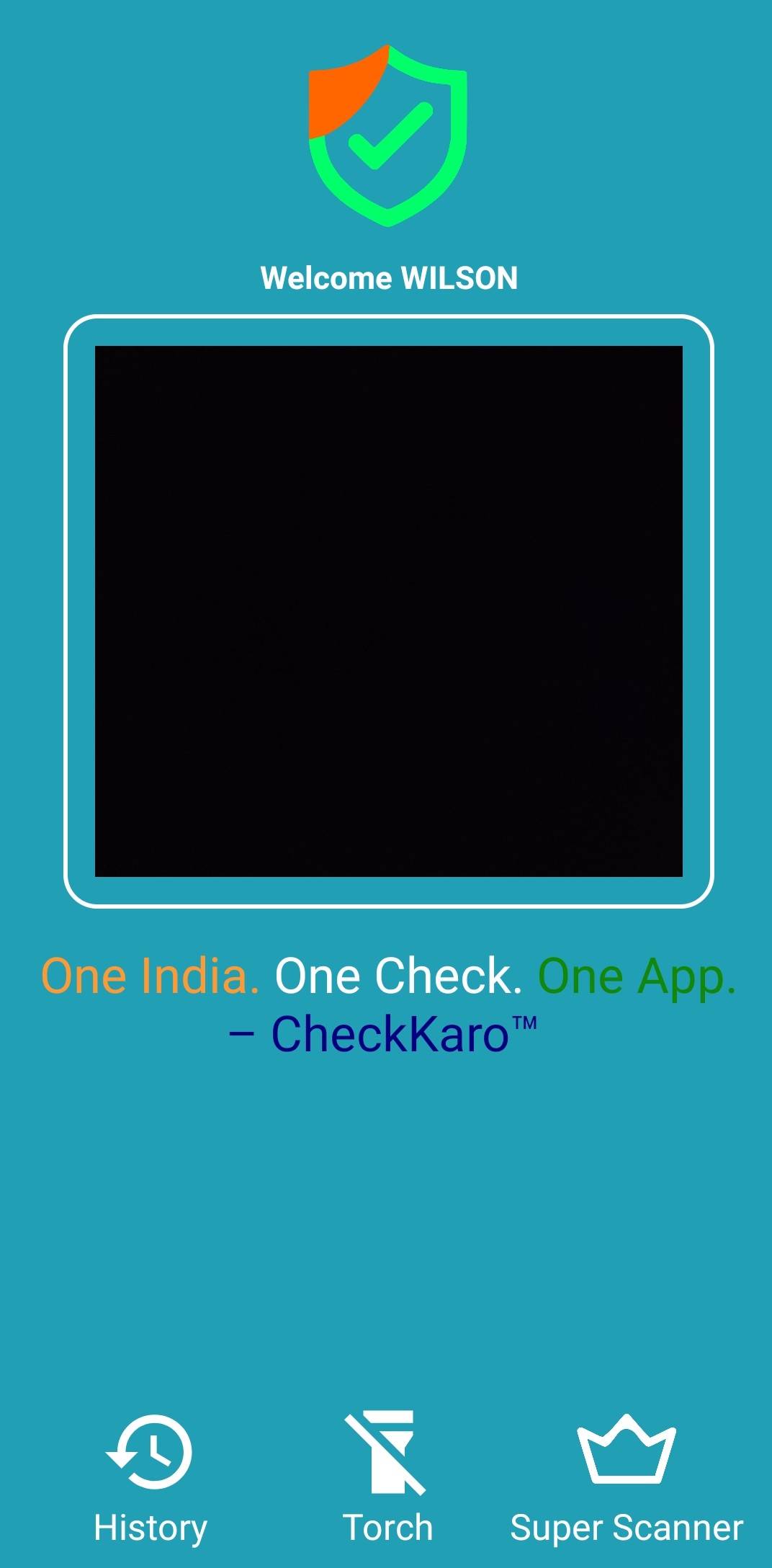
Any citizen downloads the CHECKKARO™ Checker app (free, always). When someone arrives at their door — a delivery agent, a plumber, a government surveyor — they ask them to show their CHECKKARO™ QR and scan it. The app works on any Android or iOS phone. No login required to scan. Works in low-light and low-network conditions.
REAL EXAMPLE
"Sunita Devi, 58, a homemaker in Jaipur who has never used a computer, scanned her first QR in under 10 seconds after her granddaughter showed her once. 'It just shows his face and gives me a Green Tick. I instantly know he is safe to let in.'"
The machine checks: Is this QR valid? Has it been cloned? Is the time window correct? Is the location authorised? Simultaneously, the citizen sees the registered photo on their screen and matches it to the real person. This dual-layer check — algorithm plus human judgment — has a near-zero false-positive rate.
REAL EXAMPLE
"A fraudster stole a genuine BESCOM employee's old ID card. The QR scanned valid. But the photo showed a 40-year-old man — the fraudster was clearly 25. The homeowner denied entry and reported. The AI flagged it as a location anomaly too: the real employee was working in Whitefield that day."
Every scan creates an immutable log: exact timestamp, GPS coordinates, device ID, checker identity (if logged in), scan result, and optionally a photo. This log is backed by optional blockchain verification for enterprise and government clients. If a fraud happens, there is always a forensic record of what transpired and when.
REAL EXAMPLE
"When a courier fraud case went to consumer court in Kolkata, the CHECKKARO™ scan log became key evidence. It proved the delivery agent's QR had never been scanned at the complainant's address — meaning a third person had made the delivery without authorisation."
If the scan result is INVALID, or the person doesn't match the photo, the citizen can tap "Report Suspicious" in the app. Their location, scan data, and (optionally) a photo of the suspect are captured instantly and sent to: the Assigner company, the CHECKKARO™ fraud team, and a local cybercrime helpline if escalated. Every report is timestamped and admissible.
REAL EXAMPLE
"In Noida, 14 residents in the same housing society independently reported the same fake 'gas cylinder safety inspector' across 3 hours. CHECKKARO™'s system auto-flagged a pattern, notified the society's admin, and alerted Noida Police. The fraudster was apprehended the same evening."
Enterprise and government Assigners get a live dashboard showing every scan happening across their entire operation in real time. Anomalies — an agent's QR being scanned 50 km from where they should be, multiple failed scans on one code in rapid succession — trigger instant alerts to the compliance team.
REAL EXAMPLE
"IndusInd Bank's fraud team detected an anomaly: a loan officer's QR was scanned 6 times in 3 hours across 4 different pin codes simultaneously. Impossible. The officer had been impersonated. The bank froze the code and notified customers — before any money was collected."
When an employee resigns, their QR is revoked in seconds — any subsequent scan shows INVALID with a message: "This assignment has been terminated." When a contract is extended, validity updates instantly. Photos can be refreshed. Access zones can be changed mid-assignment. All changes propagate in under 3 seconds globally.
REAL EXAMPLE
"A Zomato delivery partner's employment was terminated at 2:47pm on a Tuesday. His QR was revoked at 2:49pm. At 3:12pm, a restaurant in Koramangala attempted to hand over an order to this person — they scanned his CHECKKARO™ code, got INVALID, and refused the order. His access lasted 23 minutes post-termination. Caught."
CHECKKARO™'s analytics layer shows Assigners verification heatmaps, time-of-day fraud attempt clusters, geographic fraud corridors, which agent IDs get the most suspicious flags, and compliance reports for regulators. For government departments, this becomes a real-time public safety intelligence layer.
REAL EXAMPLE
"Maharashtra Tourism Board's quarterly CHECKKARO™ report revealed: 73% of fake-guide reports cluster between 9am–11am near Ajanta Caves entry. They deployed licensed-guide checkpoints specifically during that window. Fraudulent guide incidents dropped 68% in one season."